Showing posts with label barthes. Show all posts

Tuesday, 16 February 2010

Assignment 2D and Final Conclusion

The next step was to choose one story from 2C and add a fourth image. I then asked a separate set of individuals to see if this addition caused the stories to be read in just one sequence with a singular storyline:

i chose my eighth from the previous task :
8. 49 year old female business development director
The man in his old boat was terribly unhappy due to the fact that he could not harvest his crops. He then received help from an aid worker, which allowed him to travel to the big city where the weekly market was held so he could earn a living to buy food and in turn support his family.

I decided to add an image of an African market :


I later added the word harvest to my third image which seemed to help connect the images resulting in a more successful set of results. Here are the results from my second and smaller sample of individuals as i felt eleven may have been too many :

1. 20 year old female textile design student
The worker harvests his produce and gets in his boat and goes on an adventure to the big city where he sells them at the market.

2. 19 year old female textile design student
The boy’s job is transporting local produce from the market, across the river to the big city. On his trip one day he got stuck in the thick moss.

3. 11 year old female school student
There was a palace which the man in his boat worked for. He went to harvest the weeds to take and sell at the market.
4. 19 year old female jewellery student
The boatman picked up the plants and took them to the town to sell at the market.

5. 19 year old female art student
A young man sailed to an island to harvest his crops, he then went to town and to the market to sell his produce.

6. 16 year old male school student
The market was far away and the river was full of thick weeds so it took the man until dark to reach the city where he would be able to sell what he had made the next day.


After adding the 4th image and a single word, it is clear that the stories thought up by the individuals asked have become increasingly similar and there seems to have been a constant interpretation between everyone asked. This proves that text and imagery, if displayed in a certain way can be successful in portraying a story/ idea/ product/ lifestyle which is more universally understood. My understanding of polysemy has improved as I now see how important it is to carefully compose and conduct within design to ensure that the viewer/client experiences and sees your work as you intended. I feel this experiments results agree with Barthe's theory that images have many differing meanings and understandings due to the differences between the stories first collected. The differences will most certainly be based around age and background. It is only when information is made clear and stories are emphasized that more people being to make similar connections. How information is composed is therefore critical in levels of understanding.

Assignment 2B & C

I began this task by selecting three random images which included :


I then asked a selection of people to make up their own stories which linked the images together. Here are the results :

1. 47 year old male managing director
A merchant banker, walking through St James Park in London, is inspired by the beauty and simplicity in the plants living independently of financial support. He decides to move to the Somali village where his grandfather grew up, to become a fisherman and help educate young people.

2. 17 year old male customer service advisor
A fisherman loses his oars for his boat, in river weed so he cannot get back to the nearby town with his catch before dark.

3. 14 year old male school student
A man rests his head on the bow of his boat moored at the bank of the muddy river, surrounded by drift weed. On the opposite side of the river, the palace towers are illuminated by hazed lights tinged blue by the reflection of the water.

4. 19 year old female jewellery design student
After years of sailing along the river, a young man decided he wanted a new life of luxury and to live in a white tower with a beautiful woman. He went to search, sailing solo and finally came across a damsel in distress on a rock. His boat got trapped in weeds and the woman turned into an octopus and eats him.

5. 19 year old female textile design student
A boy who owned a boat took tourists back and forth to two local islands. One was historic and full of amazing architecture and the other was a more traditional, natural and earthy land.

6. 19 year old female textile design student
An African farmer who is also a fisherman has been growing crops for export to a large city, His produce so far has not been allowed into the country and politicians are meeting at night to discuss whether the produce should be allowed into the country.

7. 19 year old female fine art student
A young man sailed for 2 hours in his homemade boat across the river to harvest his crops. He worked all day and then sailed back to sell his harvest at the government building so he could afford to feed his family for the next week.

8. 49 year old female business development director
The man in his old boat was terribly unhappy due to the fact that he could not harvest his crops. He then received help from an aid worker, which allowed him to travel to the big city where the weekly market was held so he could earn a living to buy food and in turn support his family.

9. 19 year old male engineering student
An African boy grew up as a fisherman on a farm where they harvested grasses. He dreamt of a life in civilisation in the nearby city.

10. 20 year old male history student
A fisherman set out on a fishing trip. When he reached the centre of the lake he looked into the murky weed filled water where he finds the Lost City of Atlantis.

11. 19 year old female jewellery student
A man was sailing when he found a strange plant in the water. He decided to take the plant to be tested in the city and he arrived after dark. He could see the lights hitting the building as he docked.


It's clear that asking a broad range of individuals to explain a story from three images, results in many differing interpretations. The order in which the images have been placed shows some similarities in certain peoples thinking. The most common was the man in the boat followed by the river weed and finally the buildings at night. Although the stories show connections there doesn't seem to be any which show a exact replica of another. This is expected as no two people could possibly word their stories exactly the same. This experiment is already backing up Barthes theory of differing interpretations of the same source.

The Rhetoric of the Image - Roland Barthes

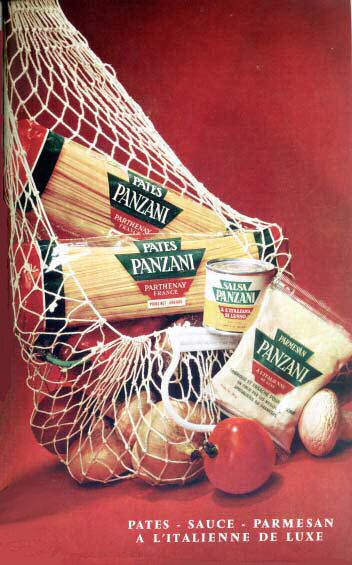
Reading Roland Barthes' essay 'The Rhetoric of the Image', has allowed me to understand the many ways in which images can be read. An image can be an extremely successful means of projecting an idea, lifestyle or product. Barthes studies how we can communicate by means of signs and symbols collectively known as semiotics. He uses an advertisement from the Italian food company Panzani to illustrate that we automatically associate elements such as colour and symbols with a certain culture/ lifestyle. The tri-coloured hues and Mediterranean vegetables immediately evoke thoughts of the Italian culture - 'Italianicity'. Individually, we interpret images in different ways as our understanding is based on previous life experience and background. Polysemy, as Barthes explains, is the term used to describe a sign with multiple meanings. He explains within his text that there are three separate types of messages within an image. The first is the linguistic message which is the language and text. Text can in many circumstances enhance an image by increasing our level of understanding of the designers message. For example, clever use of text within textile designs, produced to raise awareness for a certain cause, may clarify the issue which the designer set out to highlight. The second message is the denoted message which is non-coded and iconic. This includes our basic knowledge which is fixed within us from a young age and is understood by most without much thought. Finally the coded-icon or connoted image is elements which could indeed be interpreted in many different ways. Depending on how knowledgeable an individual is, any image can be read into mainly to uncover elements which evoke feelings or connections to another known source.
To relate this to textiles, I feel it is important to be aware of the differing interpretations people have of symbols depending on their background and culture. To project a particular idea you must understand how to help the viewer see your work as you intended. Composition can have a huge impact within textile designs as it can either enhance or take away from the overall success of a piece. Researching before creating textile designs is important so that your designs are not likely to be offensive to a certain group of people or an individual. Colours are also key in attracting attention as they are associated with many emotions, organisations, religions, etc. The visual is extremely important to designers in general as it is what their audience or client see and interpret. So in order to engage your desired customer you must understand how they view the world and present yourself and your business in a manner which they can relate to.